About
About this project and its statement of faith.
Drawn in these studies
-
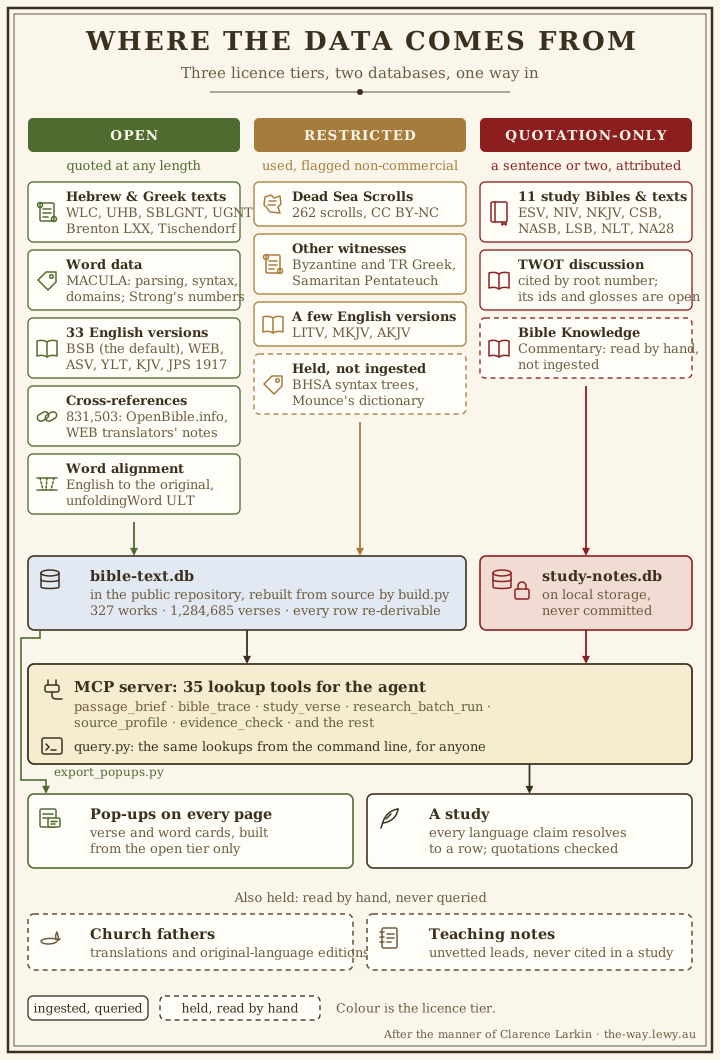
Where the data comes from · Our Data Sources
The studies
-
Statement of Faith
Personal statement of faith and biblical doctrine
-
Recently Updated
A running list of the studies and pages on this site that have been newly published or most recently revised.
-
Our Data Sources
What Bible text, lexical, and commentary data backs this site, organized by license tier, and what each tier is and isn't used for.
-
Backlog
A public working list of study topics and research items still to be developed, organized by the site's own subject sections.
-
Copyright & Scripture Permissions
Copyright notices for the Bible translations and reference works quoted on this site, and the terms under which they are used.
-
For AI Assistants
How an AI assistant should read, represent and quote this site when a reader asks it a question: who writes it, what it holds, where its data is, and how to answer from it faithfully.
-
How We Cross-Reference Scripture
Scripture links on this site are derived from the biblical texts themselves rather than copied from a cross-reference list — how that works, the five kinds of evidence it produces, and why they are never merged into a single score.
-
Key Takeaways
What the Key Takeaways section at the top of every study is for, the five things it draws out, and the two verses it's built on.
-
Our Taxonomy
How studies on this site are organised: the systematic-theology loci it's based on, the plain-English name used for each section, and the academic term behind it.
-
How This Site Is Built
The tech behind this site: mkdocs with React tools bundled in, the develop-bible-study skill, the Bible-text/Jewish-literature data pipeline, and how it all deploys
-
AI in These Studies
How AI is used to research and draft the studies on this site: what it does, the failure modes it introduces, the guardrails against them, and where its usefulness ends.