Jesus
Jesus Christ is God the Son, the second person of the Trinity, fully God and fully man. "In the beginning was the Word, and the Word was with God, and the Word was God", and "the Word became flesh and dwelt among us" (John 1:1, 14, ESV). This section studies who He is and what He did, and where the Old Testament promised Him. It sits between God the Father and The Holy Spirit, because the three persons are one God.
Comics in these studies
-
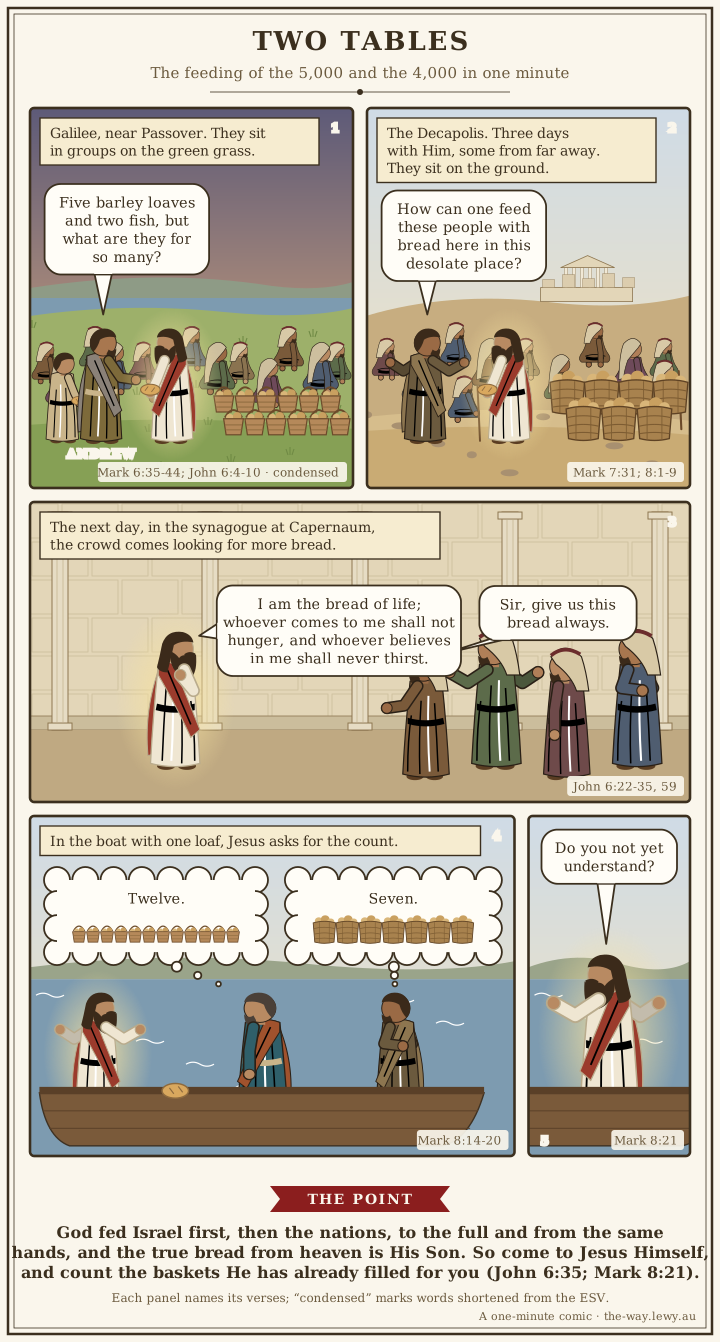
Two Tables · Bread of Life: The Feeding of the 5,000 and the 4,000
-
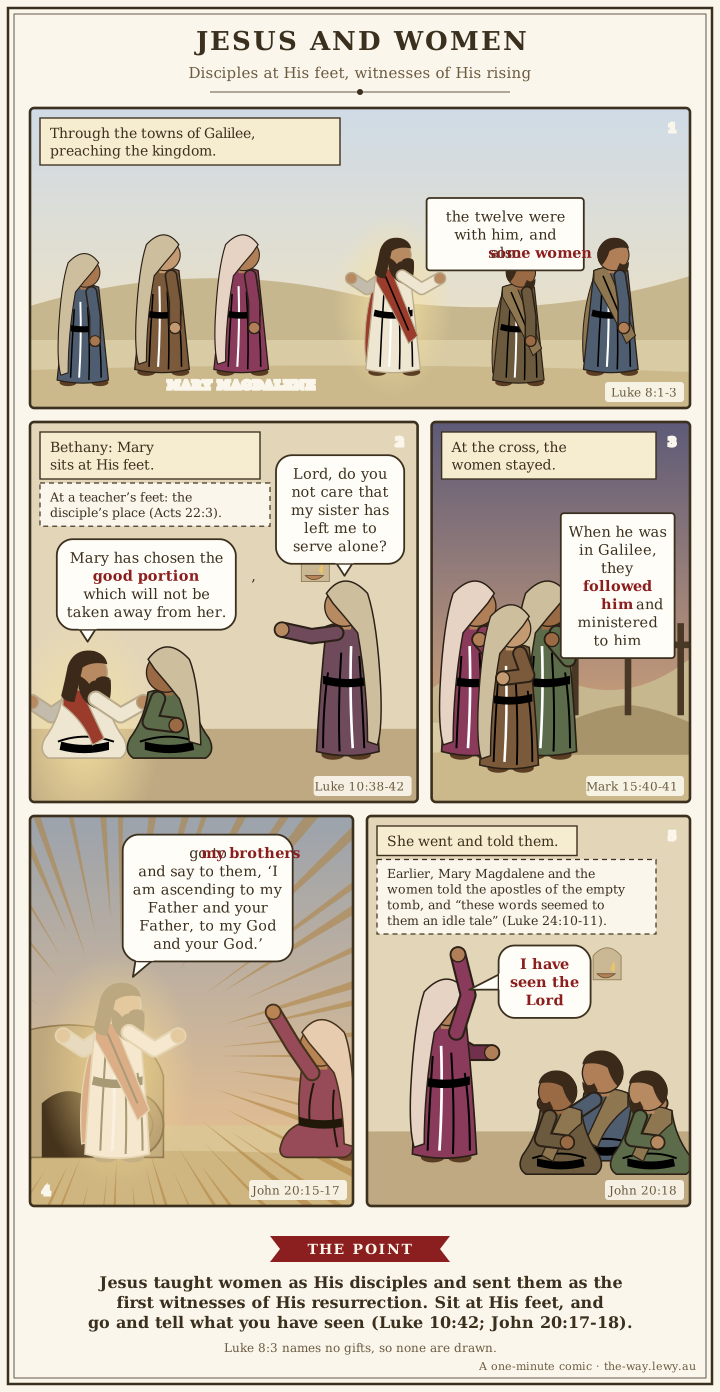
Jesus and Women · Jesus and Women
-
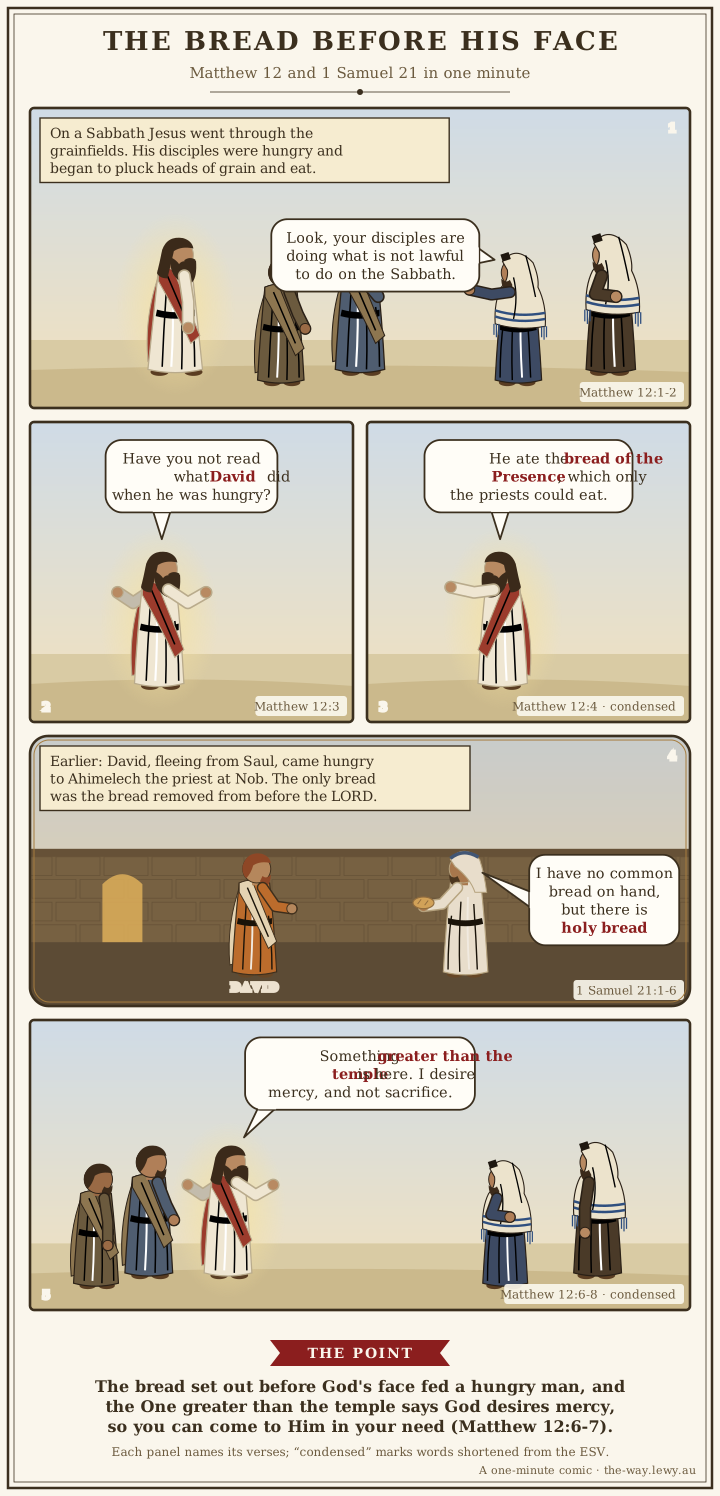
The bread before His face · The Table and the Bread of the Presence
-
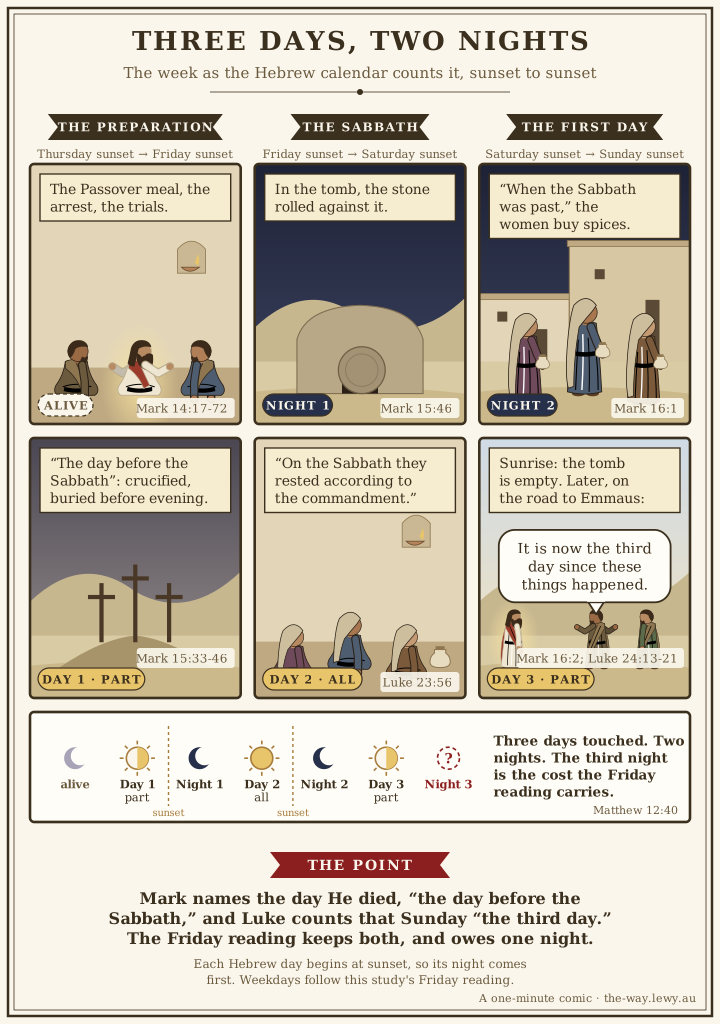
Three Days, Two Nights · Three Days and Three Nights
-
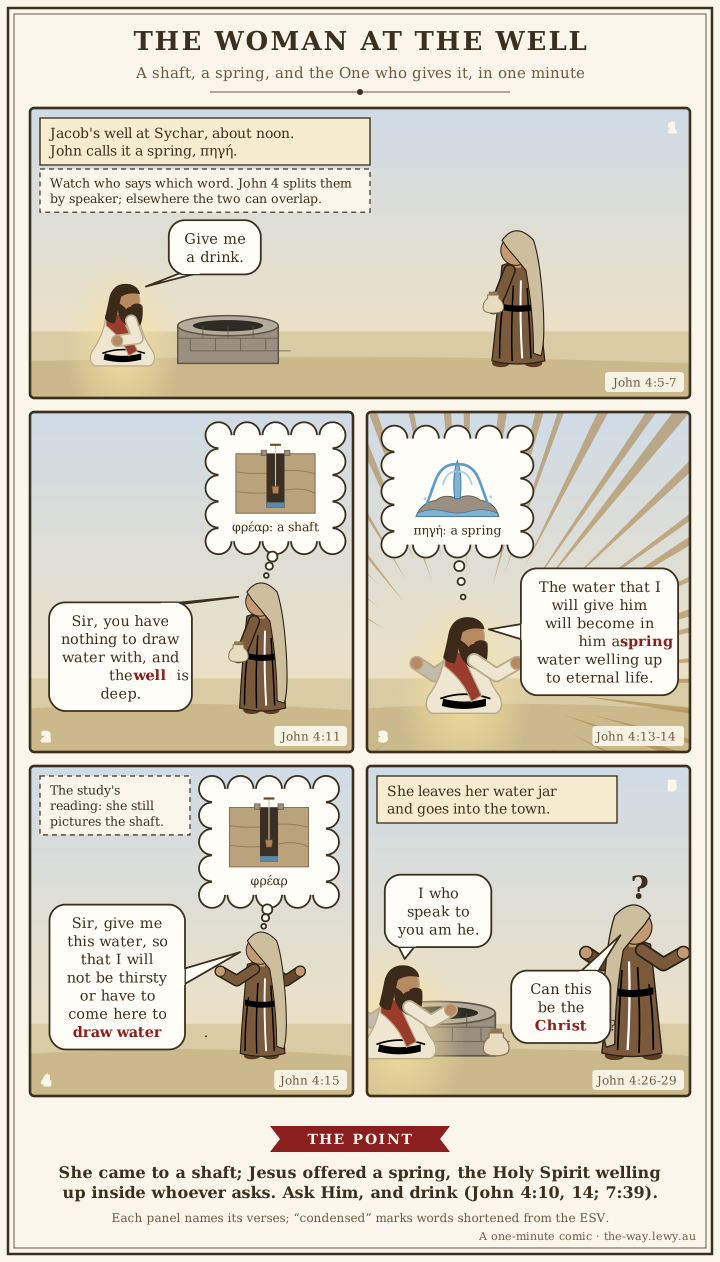
The Woman at the Well · The Woman at the Well
-
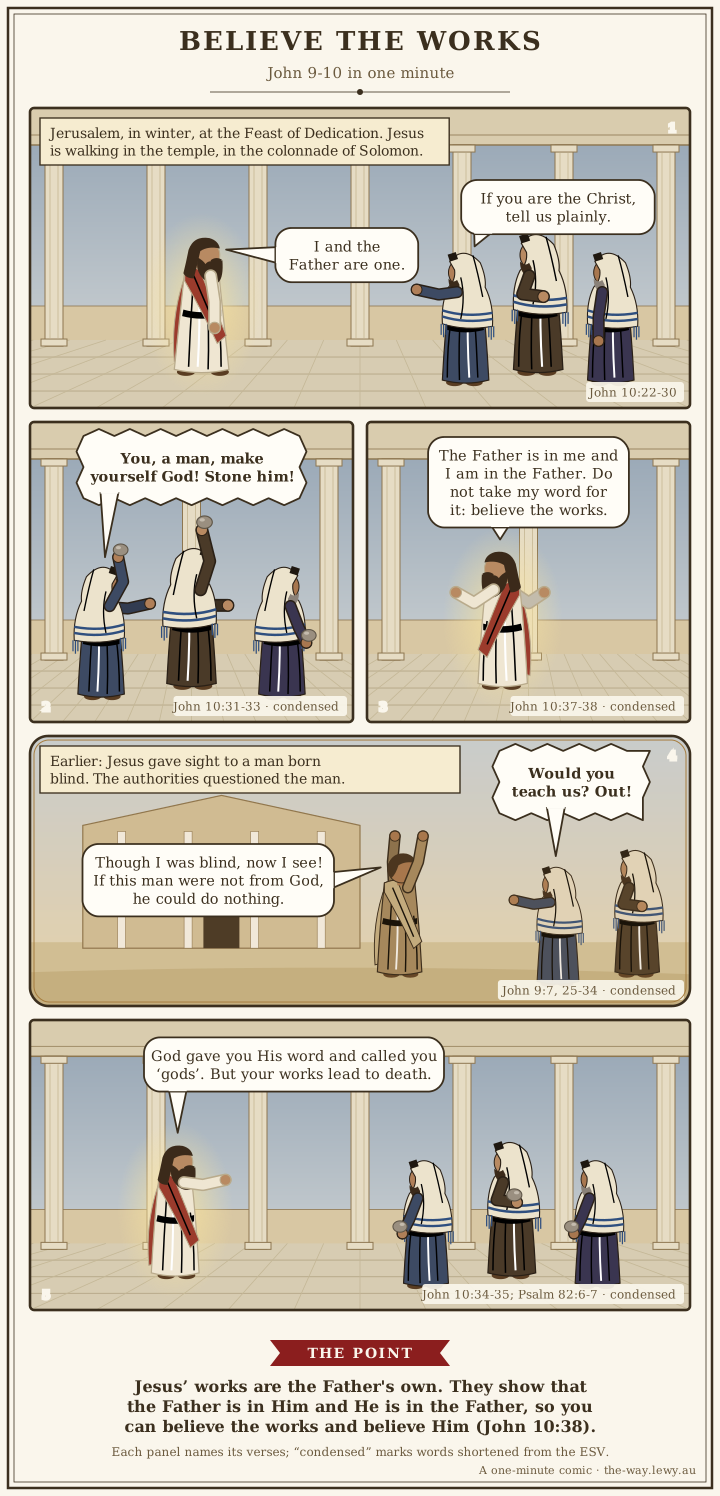
Believe the works · \"You Are Gods\": Psalm 82, John 10 and the Authority God Lends
Drawn in these studies
-
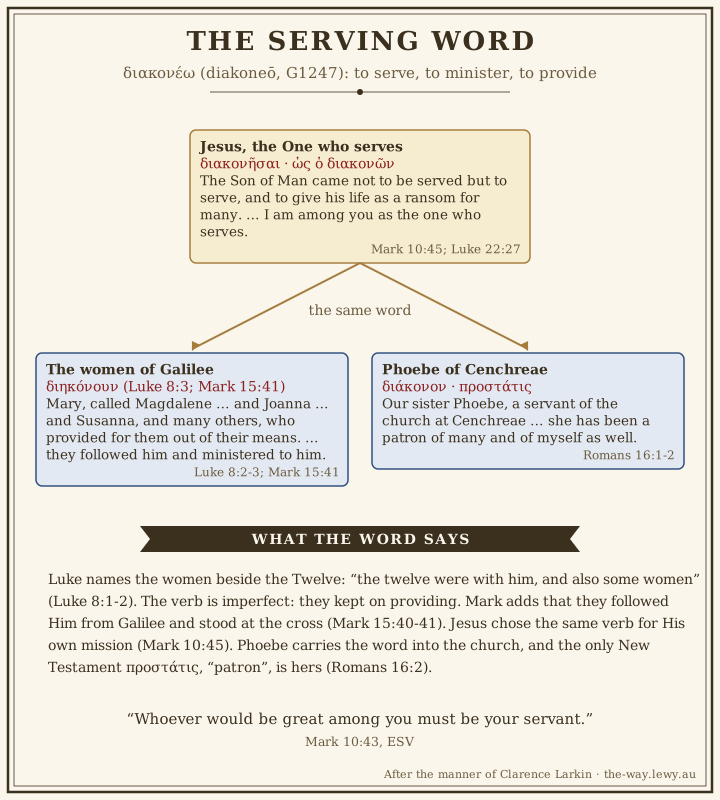
The serving word · Jesus and Women
-
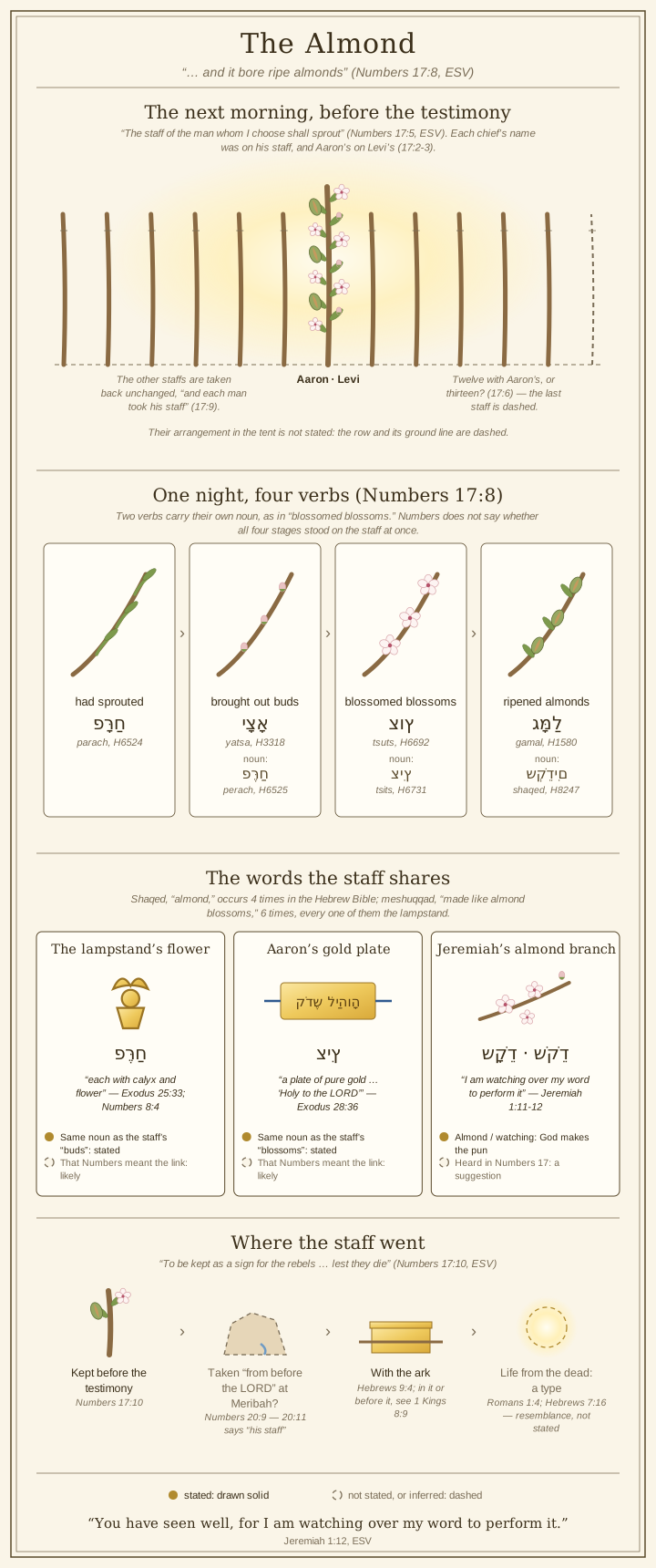
The almond: Aaron’s staff, the lampstand and Jeremiah’s branch · The Almond
-
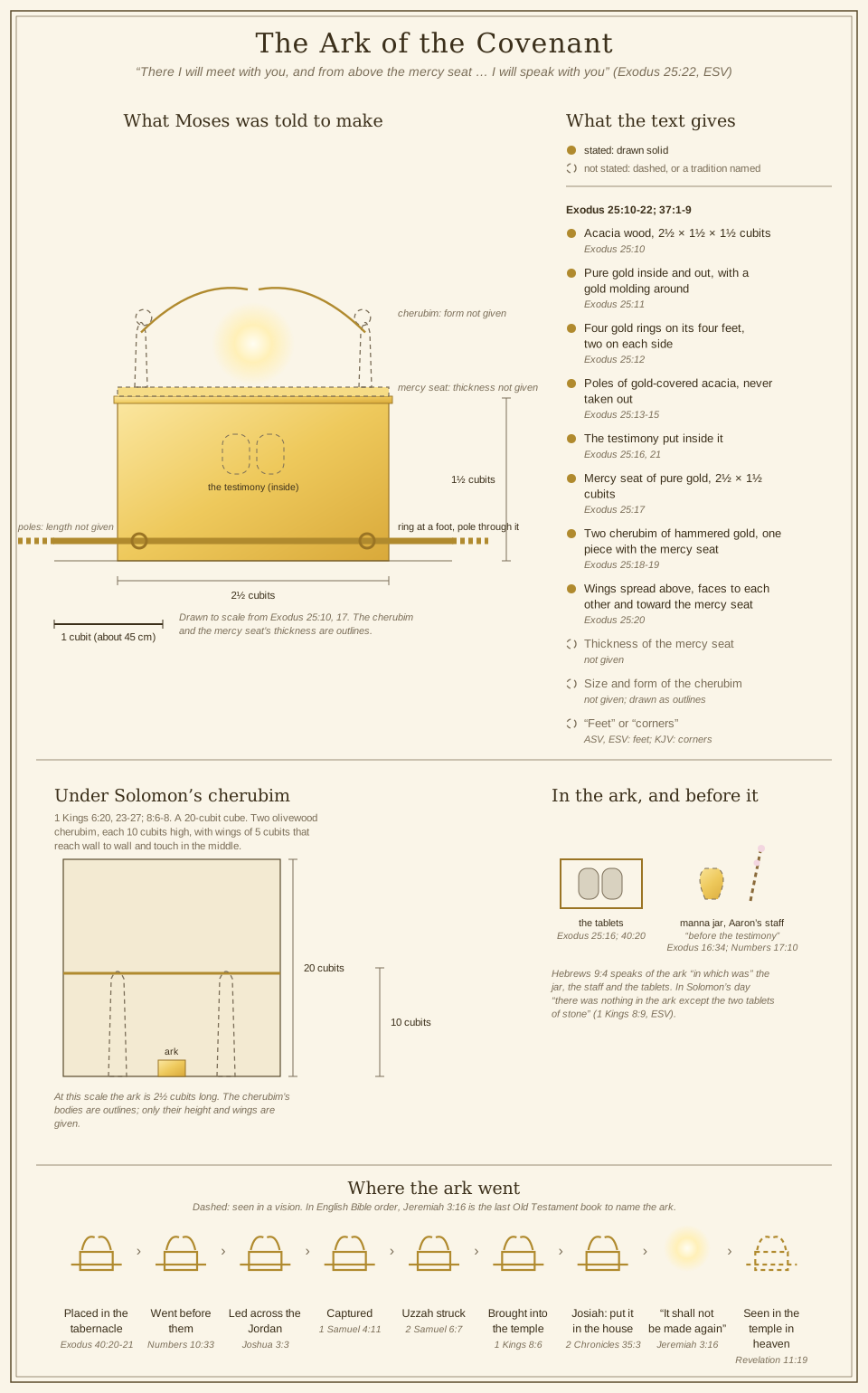
The ark of the covenant, Exodus 25:10-22 · The Ark of the Covenant
-
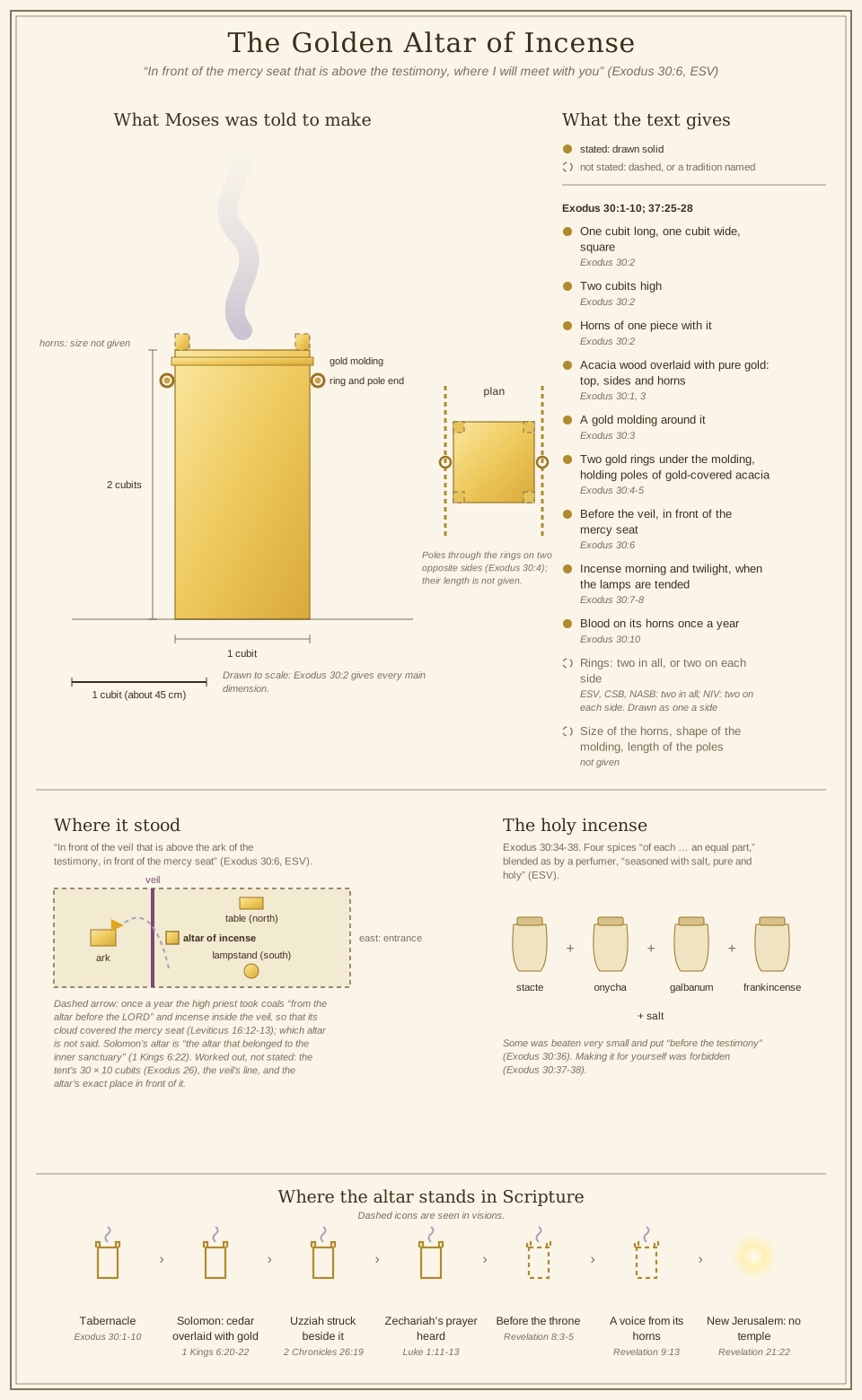
The golden altar of incense, Exodus 30:1-10 · The Golden Altar of Incense
-
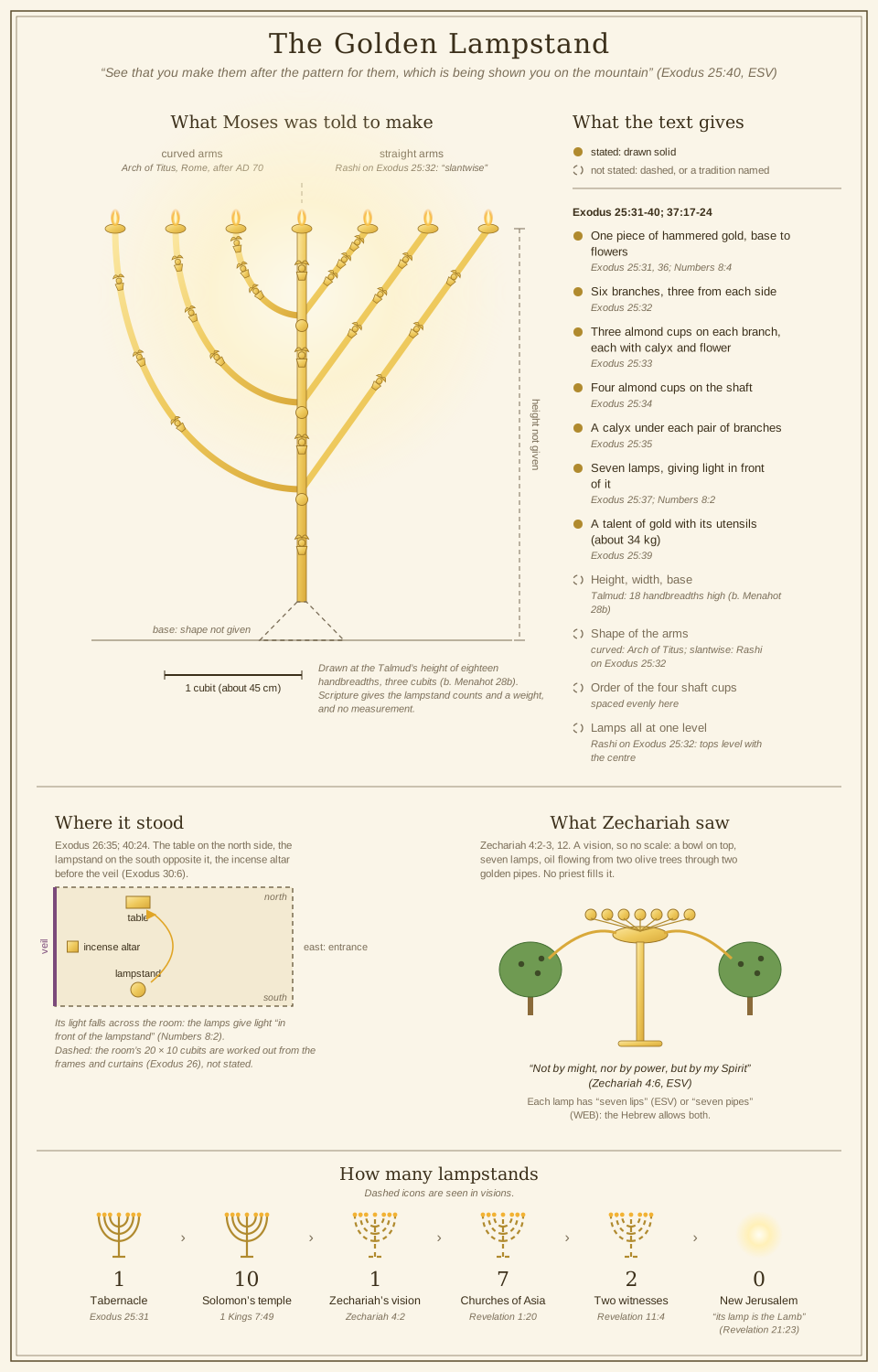
The golden lampstand, Exodus 25:31-40 · The Lampstand
-
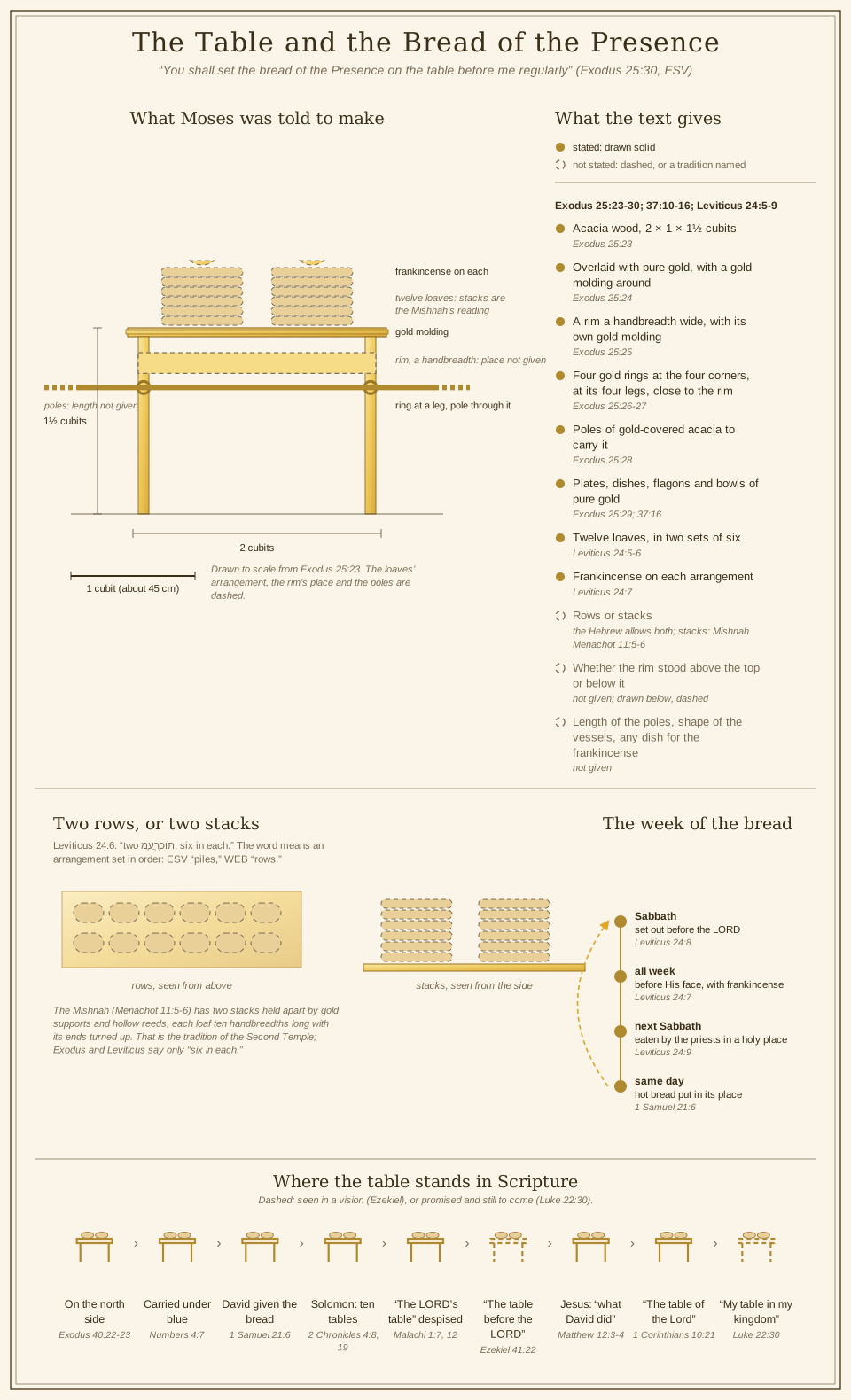
The table and the bread of the Presence, Exodus 25:23-30 · The Table and the Bread of the Presence
-
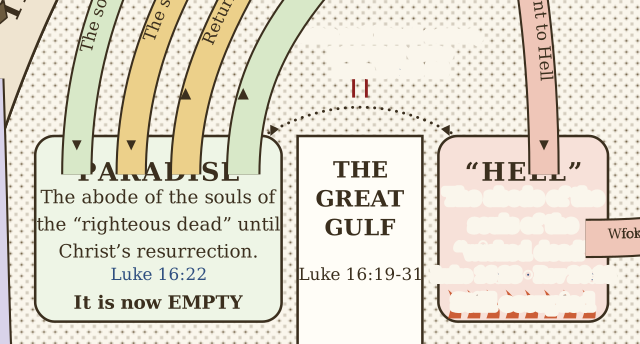
Paradise and Hell, either side of the Great Gulf · Three Days and Three Nights
-
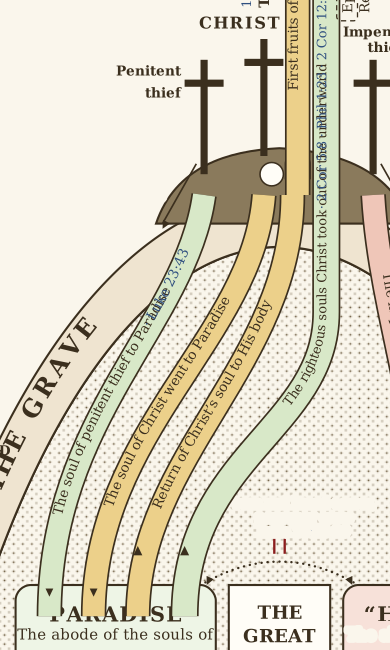
The souls go down to Paradise, and the righteous rise with Christ · Three Days and Three Nights
-
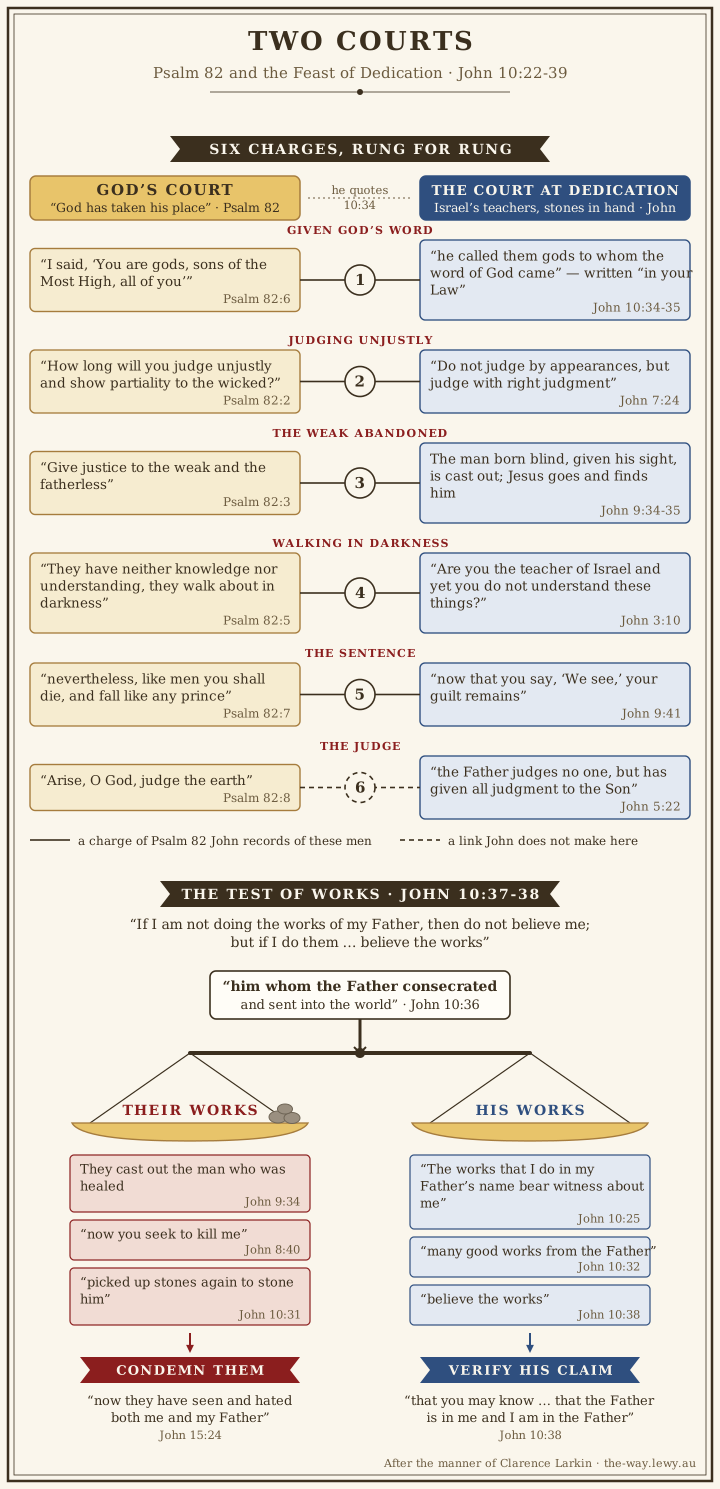
Two courts: Psalm 82 and John 10 · \"You Are Gods\": Psalm 82, John 10 and the Authority God Lends
-
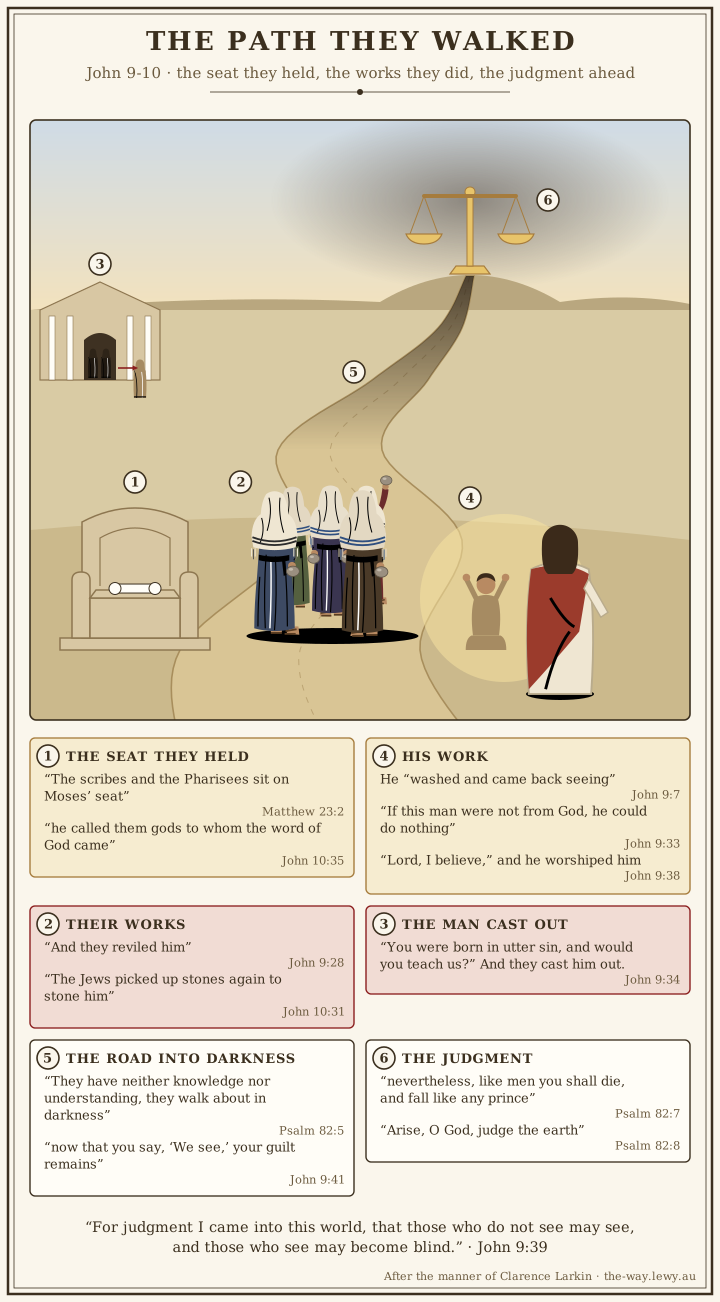
The authorities' path · \"You Are Gods\": Psalm 82, John 10 and the Authority God Lends
The studies
-
The Heavenly Pattern
A series on the tabernacle furnishings God showed Moses on the mountain and the heavenly sanctuary they copied, where Christ serves as High Priest (Hebrews 8-10): each traced from Sinai to Revelation, with a drawing made from what Scripture states.
-
As the Snake Was Lifted Up: The Bronze Serpent and the Son of Man
An exegetical study of Numbers 21:4-9 and John 3:14-15: how Jesus applies the bronze serpent to his own crucifixion, with word studies tracing 'lifted up' back to Isaiah's Suffering Servant.
-
Bread of Life: The Feeding of the 5,000 and the 4,000
The two feeding miracles read the way Jesus reads them at Mark 8:19-21 -- what He makes explicit about the sign in John 6, and what the narrative leaves implicit about Jew, Gentile, shepherd, and the wrong way to want bread.
-
Jesus and Women
How Jesus treated women against the customs of His day: as disciples He taught, followers who funded His work, people He defended, and the first witnesses of His resurrection, read with the women God sent in the Old Testament and the women of the early church.
-
The Kinsman Redeemer: Boaz, Ruth, and the Right to Buy Back
Boaz uses a kinsman's right to buy back what Naomi's family lost and to raise up a dead man's name. The son born of it is called a redeemer, and his line runs to David and to Jesus, the Kinsman who buys back His people with His own blood. The go'el office, the two laws Ruth joins, the threshing floor, the gate, the Moabite question, and where the type holds and where it stops.
-
Jesus, Priest in the Order of Melchizedek
What a priest is, what 'the order of Melchizedek' means, and how Hebrews reads Genesis 14 and Psalm 110 to show that Jesus holds that priesthood forever.
-
The Names of Jesus
A study of the names the Bible gives Jesus, from the Old Testament's Anointed, Prophet, Priest, Branch and Servant to the Son of Man, the seven "I am" sayings, the names people cried out to Him, and the names He will wear when He returns: each one an answer to His question, "Who do you say that I am?"
-
Before Aaron: Who Offered Sacrifice?
Before Sinai the heads of families offered sacrifice for their households, yet Scripture calls none of them a priest. God then appointed Aaron's sons and gave the Levites in place of Israel's firstborn, because priesthood is always His appointment, and He appointed His Son Jesus, who holds His priesthood permanently.
-
The Cups Jesus Drank
From the wine at Cana to the sour wine at Golgotha: the cup Jesus named as His death, the cup He refused on arrival at the cross and the one He received at the end, why He took the second, what the Talmud, Josephus and the early church add, and the cup still to come.
-
The Day No One Knows
"Nor the Son" — what Mark 13:32 and Matthew 24:36 do and do not say about Christ's knowledge. The textual variant, the two natures, the Father's prerogative, and whether Jesus was quoting a Jewish wedding idiom.
-
The Way
A New Testament concordance study of 'the way' (hodos): its Old Testament roots, Jesus's claim in John 14:6, and how believers called themselves the Way before outsiders coined 'Christian.'
-
Three Days and Three Nights
The sign of Jonah, and what Jonah said it was: the belly of Sheol, the heart of the seas, brought up from the pit. Where the New Testament says Christ was between the cross and the empty tomb — Sheol, Hades, Abraham's side, paradise — what it says he achieved there, and, in its proper proportion, whether a Friday allows three nights.
-
The Woman at the Well
An exegetical study of John 4:1-42: the two Greek words English flattens into 'well', why a spring is not a better bucket, and the first 'I am' in John's Gospel.
-
The Woman Who Touched the Fringe: Uncleanness Running Backwards
Twelve years unclean, she touched Jesus in a crowd and the flow of defilement reversed — plus what Matthew and Luke saw that Mark did not: she grabbed the tassel God commanded Israel to wear
-
"You Are Gods": Psalm 82, John 10 and the Authority God Lends
Psalm 82 calls those God set in authority אֱלֹהִים, "gods", and then sentences them by their works. Jesus quoted the psalm to the authorities who were judging Him, and rested His claim to be one with the Father on the Father's works, while their own works condemned them.