Chronology
Dating biblical history: what can be fixed to a year, how the numbers in Scripture add up, and the one timeline this site works to. Every date on the Prophetic Timeline is argued for here, and its Chart view prints any stretch of it on A4 sheets.
The studies read in order. They start from the events an outside record fixes, Solomon's temple onward, and count back from there through the kings, the Exodus and the genealogies of Genesis 5 and 11, ending with the whole line from creation to the present.
Other studies use these dates for their own subjects:
- Prophecy Events and Times, Six Days of History and A Day Is a Thousand Years read the timeline as a week of thousand-year days.
- The Zadok Calendar is the 364-day priestly calendar behind the site's Zadok years.
- Firstfruits and Three Days and Three Nights build on the crucifixion year settled in Chronology Anchors.
- What World Population Declares checks the creation date against the arithmetic of population growth.
Drawn in these studies
-
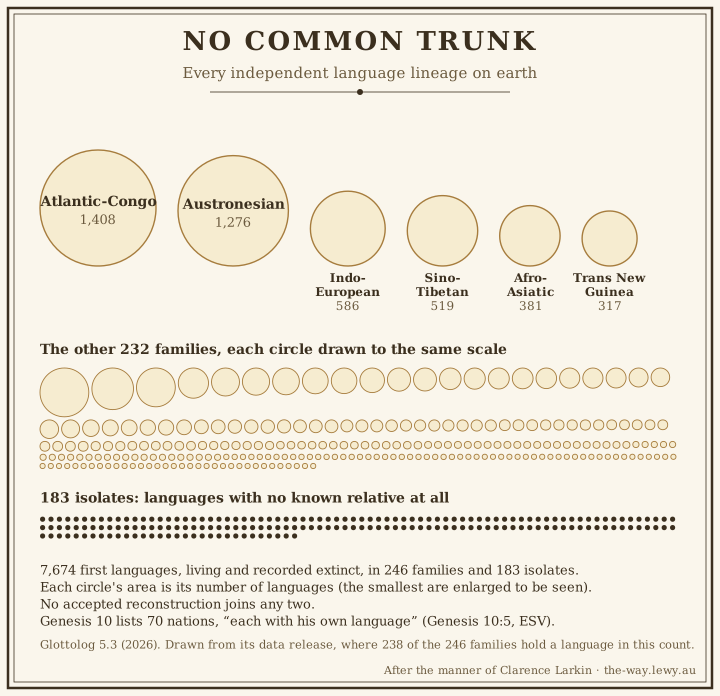
429 lineages with no common trunk · What Languages Declare: Babel and the Arithmetic of Tongues
-
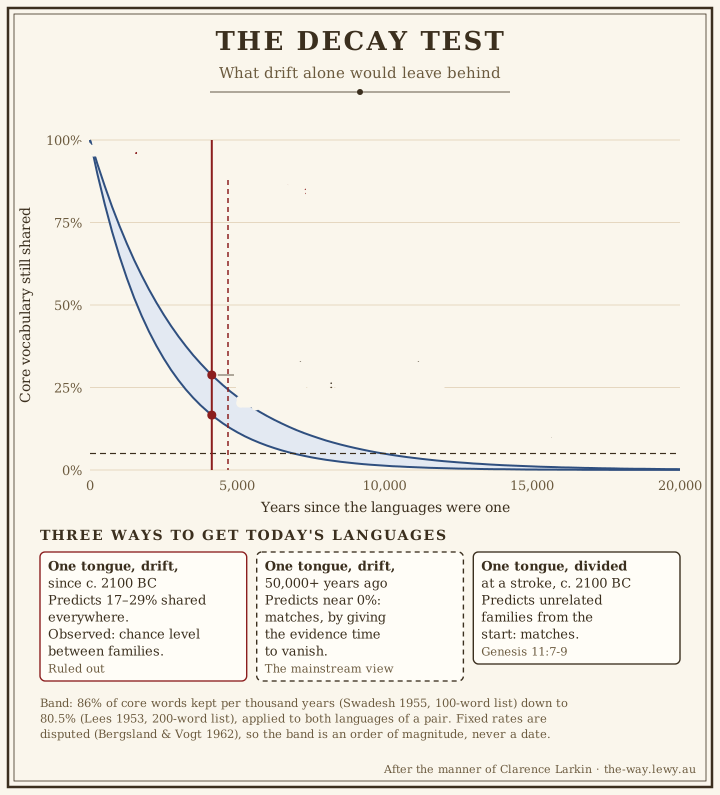
The decay test · What Languages Declare: Babel and the Arithmetic of Tongues
-
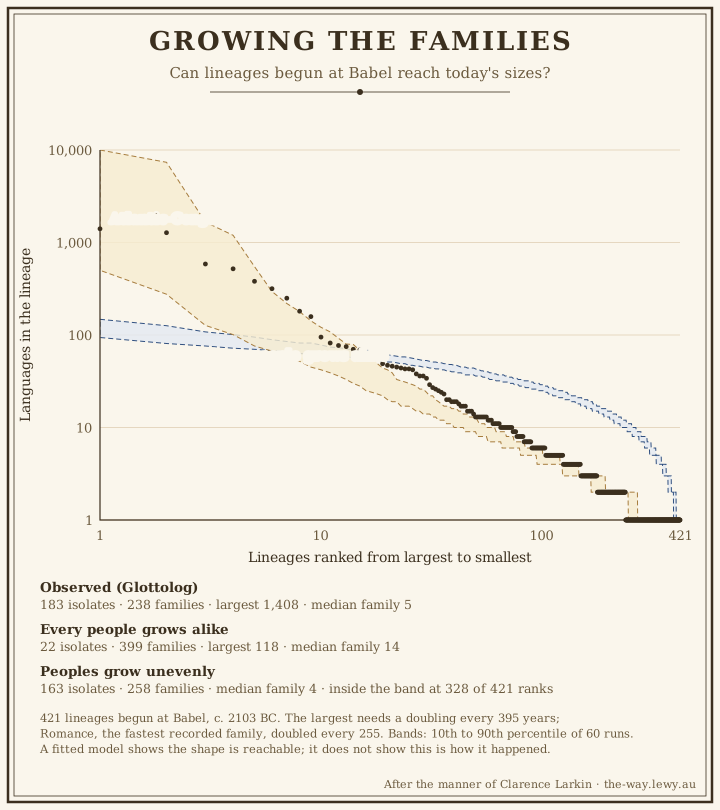
Can Babel grow today's families? · What Languages Declare: Babel and the Arithmetic of Tongues
-
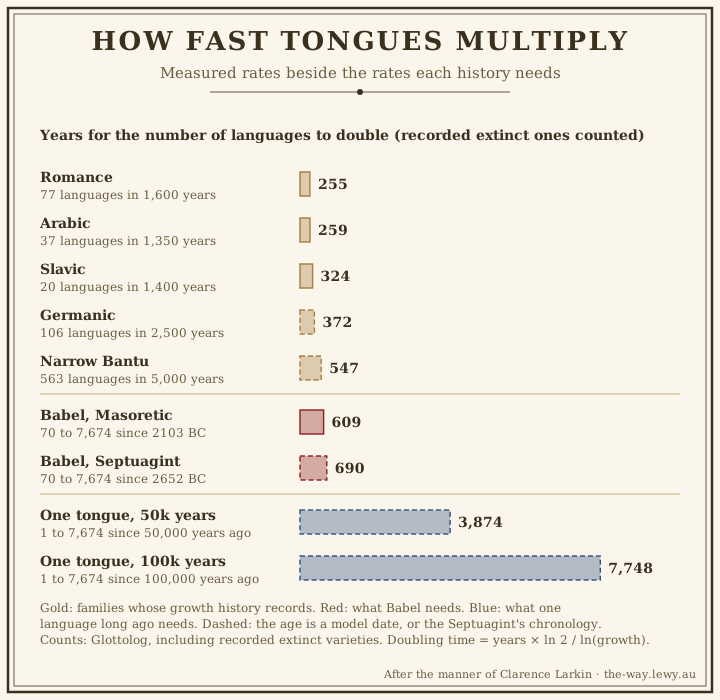
How fast languages multiply · What Languages Declare: Babel and the Arithmetic of Tongues
-
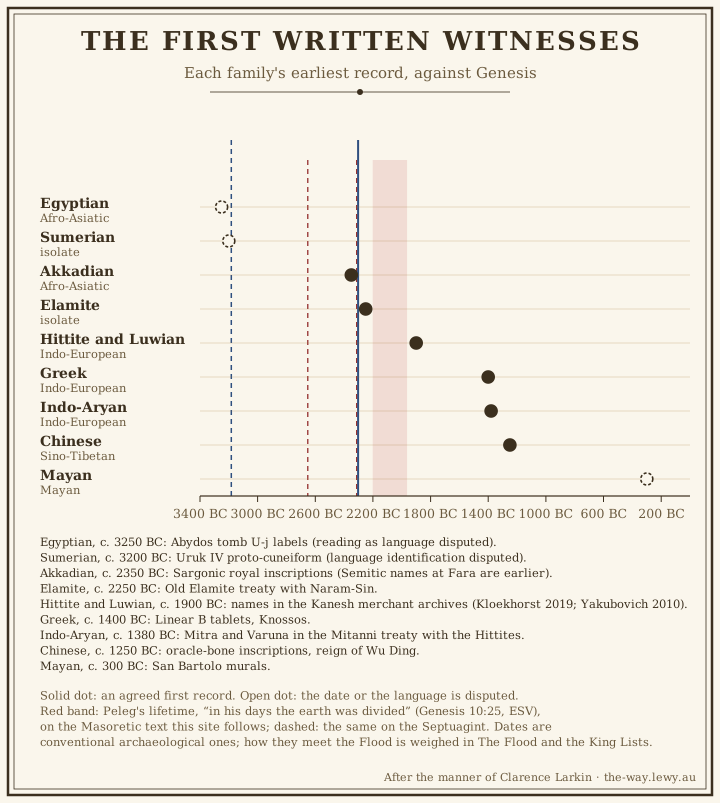
When each family first wrote · What Languages Declare: Babel and the Arithmetic of Tongues
-
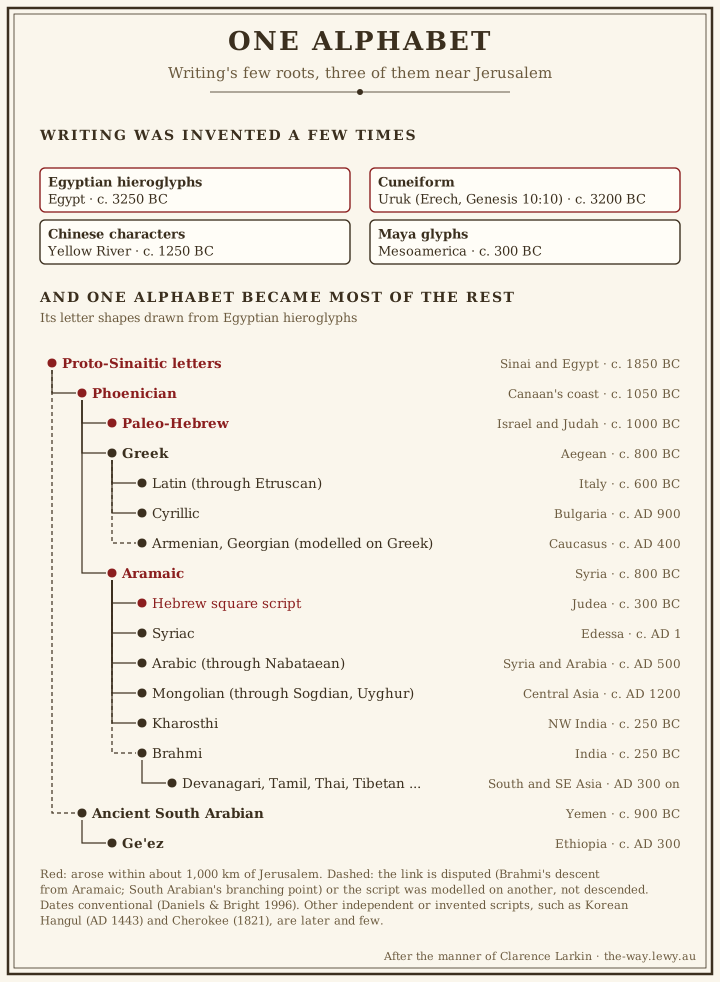
One alphabet, few inventions · What Languages Declare: Babel and the Arithmetic of Tongues
-
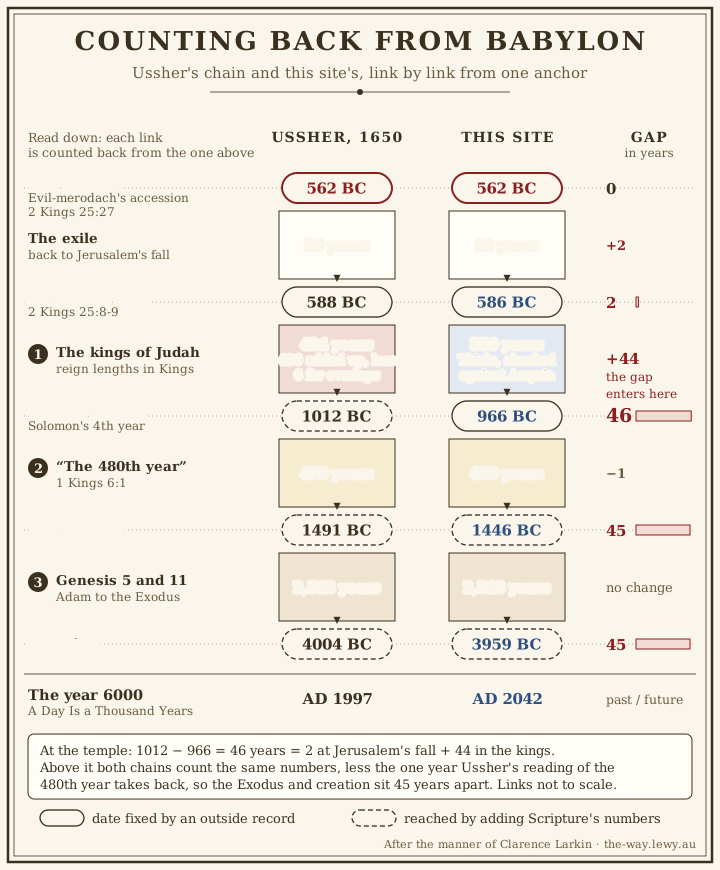
Counting back from Babylon · Why Not 4004 BC? Where Ussher's Forty-Six Years Came From
-
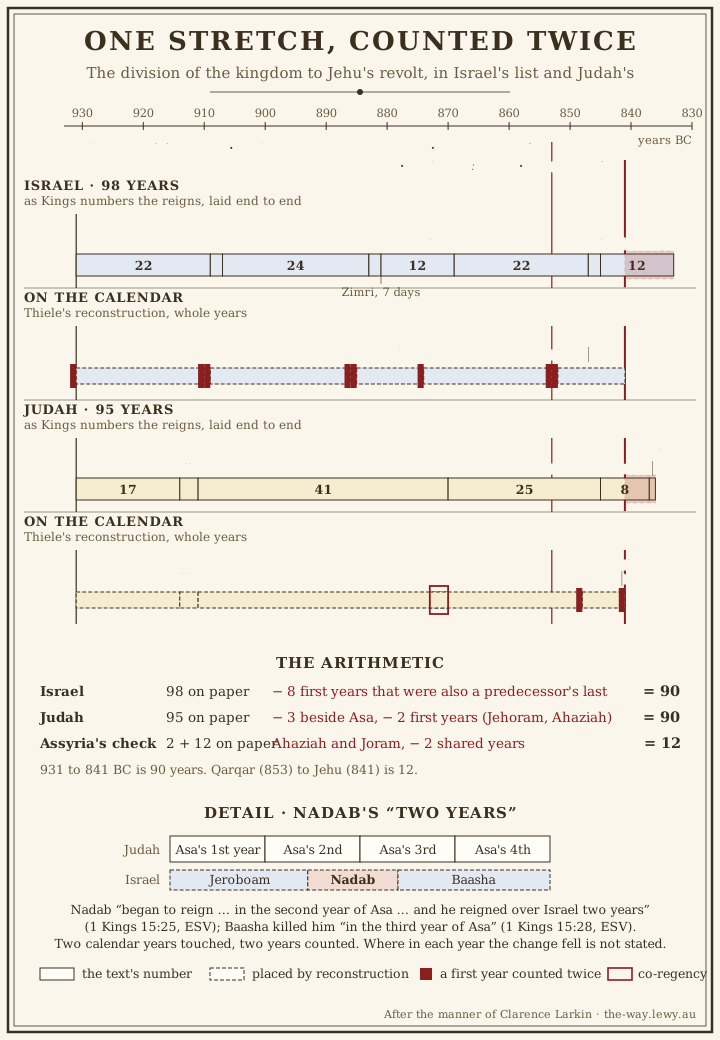
One stretch, counted twice · Why Not 4004 BC? Where Ussher's Forty-Six Years Came From
The studies
-
Chronology Anchors: What Can Actually Be Dated, and How Tightly
Forty-one events from Solomon's temple to the Resurrection, each with the evidence that dates it, an error bar, and its Zadok year. The fixed rail the rest of the biblical timeline hangs from.
-
Four Hundred and Eighty Years: From the Exodus to Solomon's Temple
Why 1 Kings 6:1's 480 years from the Exodus to the temple holds once the judges are read as regional and Ruth's genealogy as telescoped, checked against the priestly and Davidic lines
-
Why Not 4004 BC? Where Ussher's Forty-Six Years Came From
Archbishop Ussher's creation date was printed in Bible margins for 250 years. His count from Adam to the Exodus still stands; forty-six years crept in while he added up the kings, and Kings itself shows how Israel's scribes actually counted.
-
The Flood and the King Lists: Which Genesis Numbers to Trust
Genesis 5 and 11 survive in three versions whose numbers put the Flood anywhere from 2303 to 3183 BC. Weighing the Masoretic Text, Septuagint and Samaritan Pentateuch by Scripture's own consistency first, and only then against Egypt's king lists, radiocarbon, tree rings and varves.
-
Genealogy and Times: From Creation to Christ
Tracing the covenant line from Adam to Christ through Genesis 5 and 11's genealogies, comparing the Masoretic Text, Septuagint, and Samaritan Pentateuch, and asking what the names themselves are saying
-
The Combined Timeline: One Line, Two Zones
Creation to the present on a single line, showing where the biblical timeline is rigid and where it stretches — the manuscript variants diverge by 1,466 years at creation and converge on Abraham to the year.
-
What Languages Declare: Babel and the Arithmetic of Tongues
Genesis 11 says God divided one language at Babel in a single act. This study reads Babel in its context, then sets the world's 7,674 languages against it: 429 lineages with no common trunk, a decay test that rules out slow drift from one tongue in the Bible's timescale, the growth rates a long common ancestry needs, and the first written records of each family. It ends at Pentecost and before the Lamb, where every tongue is gathered.
-
What World Population Declares: Biblical Chronology and the Arithmetic of Growth
God's first command to humanity was to multiply. This study traces that command from Genesis 1:28 through Noah and Israel in Egypt, then runs the Bible's own population figures against exponential growth models — how many people are alive, how many have ever been born, and what 6,000 years of history requires demographically.