Feasts
The biblical feasts, their Old Testament instruction, and New Testament fulfillment.
Drawn in these studies
-

Atonement: sacrifice done; israel's day ahead · The Day of Atonement: Once a Year, Once for All
-
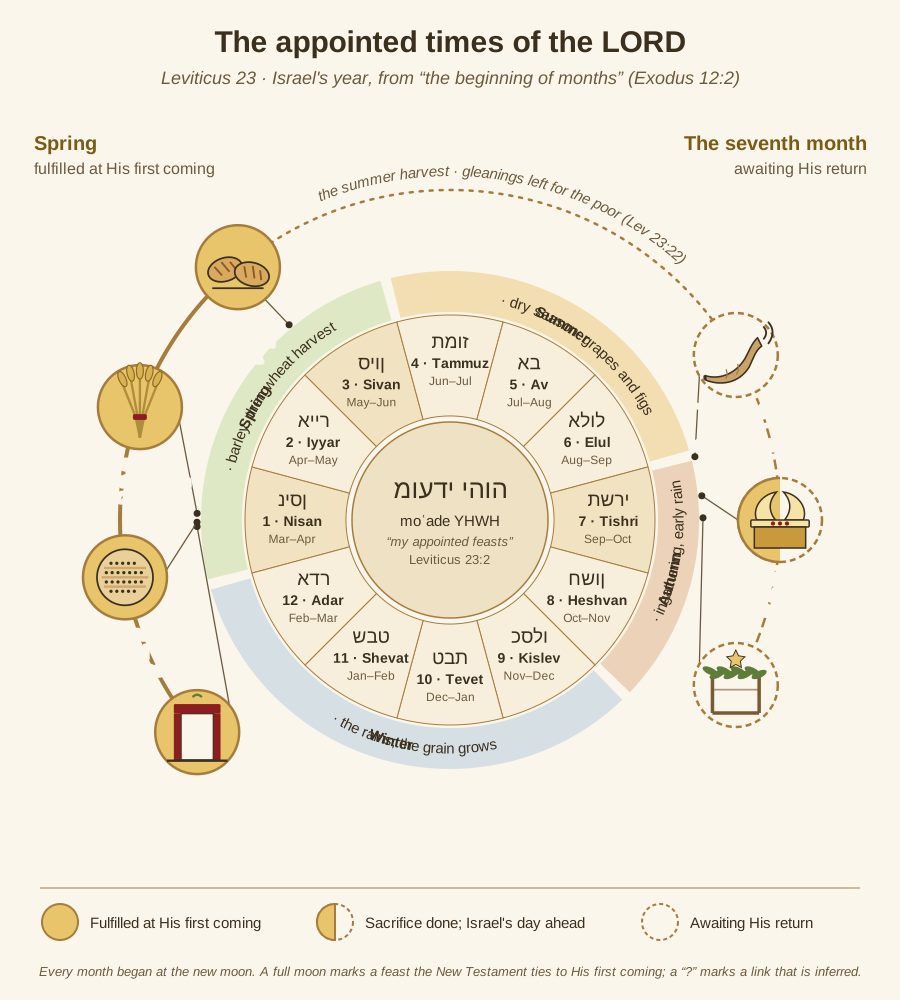
The appointed times of the LORD through Israel's year · The Appointed Times
-

Firstfruits: fulfilled at his first coming · Firstfruits: The Sheaf Waved on the Third Day
-
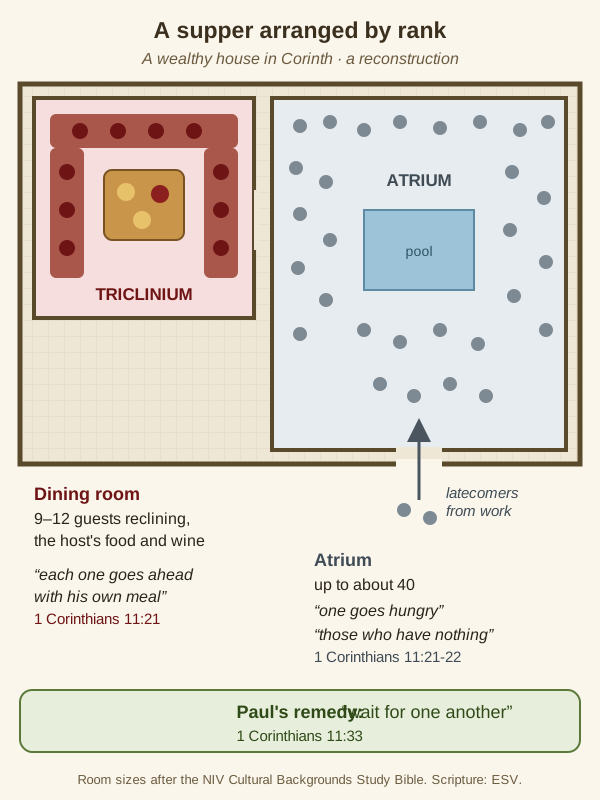
A supper arranged by rank: a wealthy house in Corinth (reconstruction) · The Lord's Supper: Do This in Remembrance of Me
-
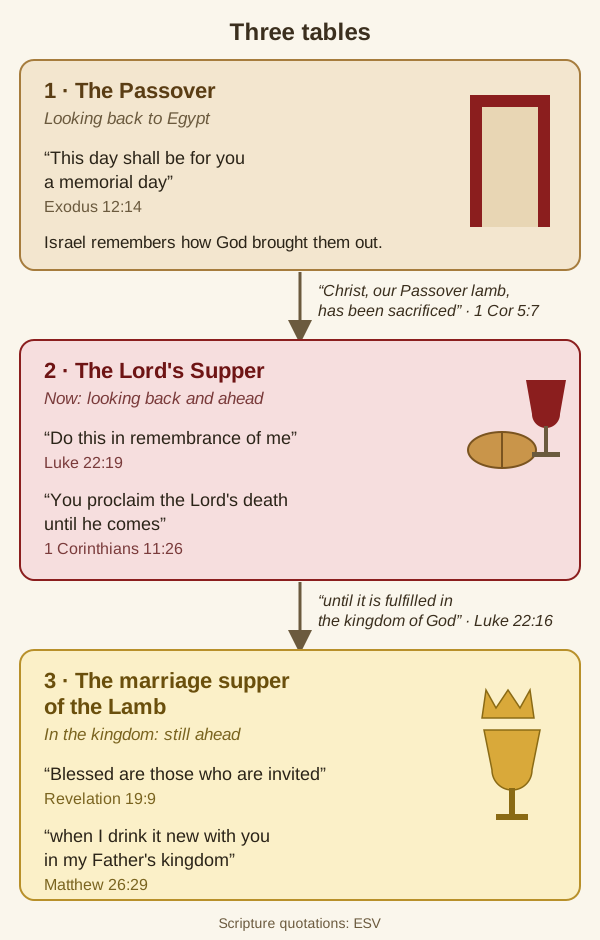
Three tables: the Passover, the Lord's Supper and the marriage supper of the Lamb · The Lord's Supper: Do This in Remembrance of Me
-

Passover: fulfilled at his first coming · Passover: When I See the Blood
-

Tabernacles: awaiting his return · Tabernacles: God Dwelling with His People
-

Trumpets: awaiting his return · Feast of Trumpets: Yom Teruah
-

Unleavened Bread: fulfilled at his first coming · Unleavened Bread: A New Lump
-

Weeks: fulfilled at his first coming · Weeks: Fifty Days to Pentecost
-
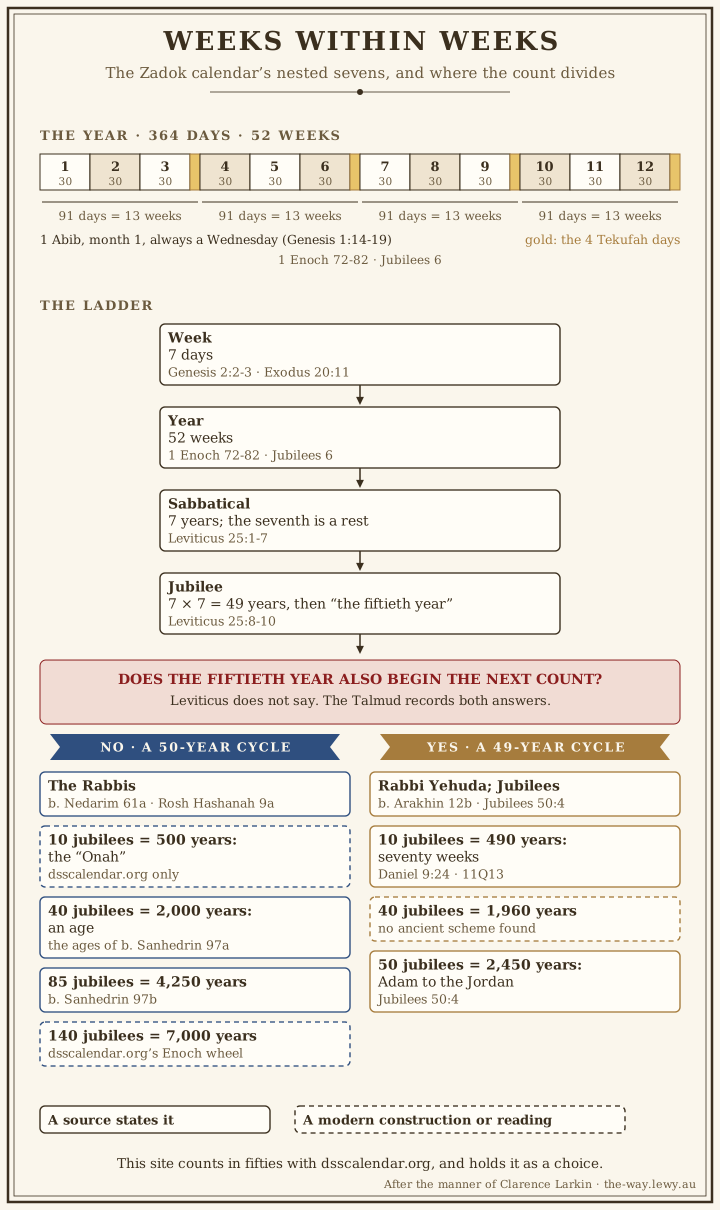
Weeks within weeks · The Zadok Calendar
The studies
-
The Appointed Times
Leviticus 23's appointed times of the LORD: what a mo'ed is, how the calendar runs from Passover to Tabernacles, which feasts the New Testament says Jesus has fulfilled, which still wait for His return, and why Christians are free to learn them as shadows of Christ.
-
Passover: When I See the Blood
Passover is the night God judged Egypt and spared every house marked with a lamb's blood. What the feast commanded, what "pass over" means, how Israel kept it, and how the New Testament names Jesus as the Passover lamb, chosen, slain at the feast and without a broken bone.
-
"I Will Not Drink Again": The Last Supper and the Cups of Passover
What the Passover Seder's four cups reveal about Jesus's vow at the Last Supper, and why the fourth cup — 'I will take you to be my people' — is the one still waiting to be drunk
-
The Lord's Supper: Do This in Remembrance of Me
The memorial meal Jesus gave His church, as the Passover was Israel's: what it remembers, what it teaches, how it makes many one body, what went wrong at Corinth, how to come to it, and the cup Jesus will drink new with His people at the marriage supper of the Lamb.
-
Unleavened Bread: A New Lump
The seven days after Passover, when Israel ate bread without leaven and cleared every trace of it from their houses. What the feast remembered, what leaven does and does not picture in Scripture, and how Paul applies the feast to a church that Christ's sacrifice has already made unleavened.
-
Firstfruits: The Sheaf Waved on the Third Day
Leviticus 23:9-14 commands a single sheaf waved before the LORD before any of the harvest may be eaten. What the statute actually requires, the disputed date that decides whether it falls on a Sunday, why that dispute collapsed in the crucifixion year, and why Paul calls Christ the aparche.
-
Weeks: Fifty Days to Pentecost
The Feast of Weeks counted fifty days from the first sheaf to the first loaves of the wheat harvest. What the feast commanded, why its loaves were leavened, the tradition that tied it to Sinai, and the day God poured out the Holy Spirit on it.
-
Feast of Trumpets: Yom Teruah
Leviticus 23:23-25's Yom Teruah, the day of shouting at the seventh new moon: what teruah means, why the day is a memorial before God, how Israel kept it, and how far the trumpets-rapture typology can be carried by what Scripture states.
-
The Day of Atonement: Once a Year, Once for All
Yom Kippur, the one day the high priest carried blood behind the veil to the mercy seat and sent Israel's sins away on a goat. What Leviticus 16 commanded, what the two goats meant, how Hebrews reads the day as Christ's once-for-all sacrifice, and the national day of mourning and cleansing the prophets still foresee for Israel.
-
Tabernacles: God Dwelling with His People
The Feast of Booths gathered Israel at the end of the harvest to live in shelters and rejoice before the LORD. What the feast commanded and remembered, what Jesus said at it about living water and light, and Zechariah's picture of every nation keeping it when the LORD is king over all the earth.
-
The Zadok Calendar
The 364-day priestly calendar behind this site's Zadok years: its year, sabbaticals, jubilees and ages, its roots in the Zadokite priesthood and the Dead Sea Scrolls, and why I use it